
Cape May: Ideal for Retirement or Second Home?
Real Estate, Retirement, Second Homes
Is Cape May, NJ a Good Place to Retire or Buy a Second Home?
Thinking about a Cape May retirement or purchasing a Second Home in Cape May? This historic seaside town at the southern tip of New Jersey blends Victorian charm, walkable streets, and a strong sense of community with a high-end coastal real estate market. Here’s a clear, balanced look at whether living in Cape May fits your retirement or second‑home goals.
The Cape May Lifestyle: Quiet Charm with Seasonal Energy
Any decision to retire in New Jersey—especially in a coastal town—starts with lifestyle. The Cape May lifestyle is defined by historic architecture, a compact downtown, and a calmer vibe than many other Shore towns. Often called the nation’s oldest seaside resort and a National Historic Landmark, Cape May offers tree‑lined streets, preserved Victorian homes, and a walkable core centered around Washington Street Mall and the beachfront boardwalk-like promenade.
Residents enjoy a rich dining scene—Cape May is frequently described as the culinary capital of the Jersey Shore, with everything from casual taverns to chef‑driven BYOB restaurants. Cultural life is strong for a small town: theater productions, gallery openings, the Exit Zero Jazz Festival, and Victorian‑themed events add year‑round interest beyond summer beach days. If you’re picturing a Cape May retirement filled with morning walks, local coffee shops, and evening sunsets over the water, that image is surprisingly accurate.
Cost of Living: A Premium Coastal Market
The trade‑off for this charm is cost. Overall, living in Cape May is estimated to be about 14% higher than the national average and roughly 21% higher than the New Jersey state average, according to recent cost‑of‑living data. A single person’s monthly expenses average around $2,833, while a family of four is closer to $6,239, and both figures have edged up since 2025. For retirees on a fixed income, these numbers matter when deciding whether Cape May is a realistic full‑time home or better suited as a second‑home destination you visit seasonally.
Housing is the biggest driver of that premium. Depending on the data source, the Cape May real estate picture looks slightly different—but all agree it’s a high‑value coastal market. Redfin recently reported a median sale price around $829,500 in the city, even after a notable 20% year‑over‑year drop, with homes typically selling in about 25 days. Zillow’s home value index paints a more steadily rising trend, with values around $745,000 and a 6.2% annual increase. County‑wide, median sale prices hover around the high $600,000s to low $700,000s, with strong demand and relatively low inventory.
📌 Key Takeaway: Cape May isn’t a budget market, but recent price softening in parts of the city may open doors for buyers who were previously priced out—especially those focused on long‑term enjoyment rather than quick flips.
Is Cape May a Good Place to Retire?
For many, the answer is yes—Cape May retirement can be deeply rewarding—provided the lifestyle and costs align with your priorities. Livability ratings are strong: Niche gives Cape May an overall A‑minus, with high marks for nightlife, outdoor activities, and health and fitness. Citytistics similarly calls out its “excellent” livability and pleasant suburban‑by‑the‑sea feel. Residents often highlight the walkability, the friendliness of neighbors, and the sense of safety and community pride.
Another plus for those planning to retire in New Jersey but looking for a gentler pace is the seasonal rhythm. Summers are lively, with tourists, events, and extended family visits. Winters quiet down considerably, which many retirees love—fewer crowds, easier parking, and a small‑town feel where you recognize faces at the market and on morning walks. For others, that winter calm can feel too quiet or even isolating, so it’s wise to visit in the off‑season before committing to living in Cape May year‑round.
Healthcare, Services, and Senior Support
From a practical standpoint, retirees will find a growing network of senior‑focused resources in and around Cape May. Nearby Cape May Court House hosts facilities like Brookdale Cape May, offering assisted living and memory care with 24/7 staff and a strong reputation. North Cape May features Victoria Commons, a family‑owned assisted living and memory care community emphasizing personalized attention. For those who prefer to age in place, the Cape May County Division of Aging & Disability Services coordinates meals, senior center programs, and guidance on long‑term care options—valuable support for anyone planning a Cape May retirement that evolves over time.
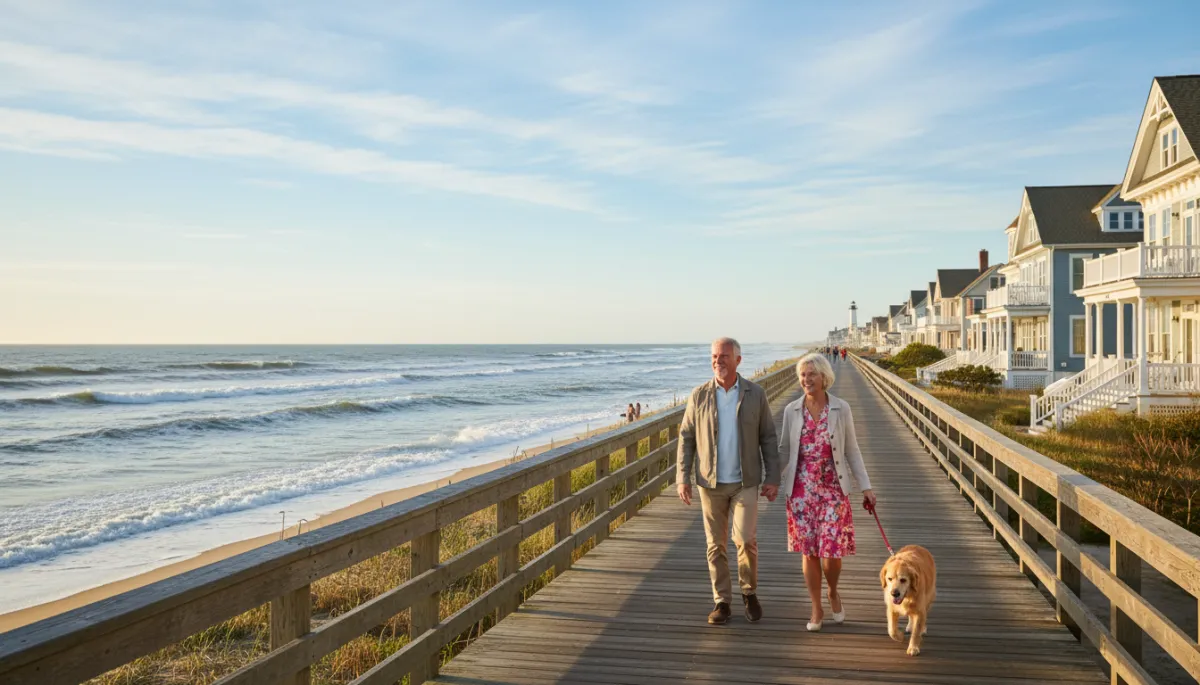
Many retirees value Cape May’s walkable beaches, historic streets, and slower daily rhythm.
Second Home in Cape May: Vacation Escape and Investment Potential
If full‑time living feels like too big a leap, a Second Home in Cape May can offer the best of both worlds: a personal retreat plus the option to generate rental income. The market data supports the idea that Cape May continues to attract second‑home buyers and investors. County‑wide, median listing prices are near $900,000, and rents have climbed sharply, with median rents approaching $4,875 per month—a sign of strong seasonal demand for vacation rentals and extended stays.
For buyers, the recent 20% drop in the city’s median sale price (per Redfin) could represent a window of opportunity, particularly if you’re flexible on property type or location. Smaller condos, cottages a few blocks off the beach, or homes in neighboring communities within Cape May County may deliver better value than trophy properties directly on the oceanfront. At the same time, Zillow and Trulia’s modest year‑over‑year price gains remind you that this is still a desirable coastal market with long‑term appreciation potential rather than a bargain‑basement buy.
💡 Pro Tip: If you plan to rent your second home, talk with a local Cape May real estate agent and a property manager about realistic occupancy rates, management fees, and local regulations before you buy.
Pros and Cons of a Second Home in Cape May
Pros: Personal access to a beloved beach town; potential rental income in peak seasons; historically resilient property values; and the ability to transition from vacation home to primary residence for a future Cape May retirement.
Cons: High purchase prices and carrying costs; strong seasonality (most demand in spring and summer); and the logistics of maintaining and managing a property from afar, especially if you rely on short‑term rentals.
Understanding the Cape May Real Estate Market in 2026
To decide whether to retire in New Jersey’s southernmost town or buy a second home there, it helps to unpack the current Cape May real estate trends. City‑level data from Redfin shows a price correction—median sale prices down about 20%—but homes selling faster, with median days on market dropping into the mid‑20s. That combination suggests that while asking prices have adjusted, buyer demand remains solid, especially for well‑located, well‑priced homes.
County‑wide statistics tell a slightly different story, with median sales prices still rising year‑over‑year and months of supply hovering around four—a classic sign of a seller‑leaning, but not overheated, market. Many sales close close to list price, and high‑end four‑bedroom homes frequently exceed $1.1 million, underscoring the area’s luxury appeal. For buyers, this means you should be prepared to act decisively on the right property, but also to negotiate thoughtfully, as not every listing is flying off the market at a premium.
Everyday Living in Cape May: What Your Year Might Look Like
Whether you’re considering living in Cape May full‑time or splitting your year between here and another home, it’s worth picturing a typical calendar. Spring brings migrating birds, blooming gardens, and the first waves of visitors. Summer is peak season: lifeguard‑staffed beaches, bustling restaurants, family visits, and a full slate of events and festivals. Fall is arguably magical—warm water, cooler air, and fewer crowds—making it a favorite for many second‑home owners and retirees alike. Winter is quiet, but not empty: year‑round residents still gather at local cafés, senior centers, and community events, and the town’s holiday decorations add a festive touch.
For retirees, this rhythm can be ideal: social and energetic when you want it, peaceful when you don’t. For second‑home owners, it offers flexibility—use your home in shoulder seasons, rent it during peak weeks, and enjoy a very different, slower‑paced Cape May in the off‑season if you choose to visit then.
So, Is Cape May Right for Your Retirement or Second Home?
Ultimately, answering “Is Cape May, NJ a good place to retire or buy a second home?” comes down to your budget, lifestyle preferences, and long‑term plans. If you value historic charm, walkable streets, strong community ties, and a refined coastal atmosphere more than round‑the‑clock excitement or low costs, Cape May is a compelling choice. The town offers a high quality of life, strong support services for older adults, and a real estate market that, while not cheap, has shown both resilience and recent opportunities for buyers.
If you’re exploring a Cape May retirement, plan several visits—especially in winter—to be sure the seasonal quiet suits you. Talk with local agents about neighborhoods, property types, and future resale value. If your focus is a Second Home in Cape May, run the numbers carefully: factor in taxes, insurance, maintenance, and realistic rental income, not just peak‑season rates. In both cases, working with a local Cape May real estate professional who understands the nuances of the market can help you find a home that fits your finances and your vision for the next chapter of your life.
For many, living in Cape May—full‑time or part‑time—means trading some financial flexibility for a lifestyle rich in beauty, history, and community. If that trade‑off aligns with your priorities, this corner of New Jersey’s coast may be exactly where you want to write your next chapter.